Women Over 45: Your Dentist Blames Your Brushing for Receding Gums. A Menopause Doctor Says It's the Estrogen You Lost, and There's a Non-Surgical Fix Before It's Too Late.

The Symptom No One Warned You About
I am not a dentist. I treat women through perimenopause and menopause, and I have for over twenty years.
And there is a complaint that comes up far more than people expect. Gums that suddenly start receding and bleeding, in women who never had a gum problem in their lives.
They go to the dentist, and they are told the same thing nearly every time. You are brushing too hard.
But they are not, and I can tell you what is really happening.
These are women who flossed, who never missed a cleaning, watching their gums recede anyway after 45. It is not a hygiene failure. It is a hormone one.
Why Your Gums Changed When Your Hormones Did
Estrogen does far more than people realize. It helps maintain collagen and the moisture and integrity of tissues all over your body.
When estrogen drops in menopause, those tissues change. Skin, the lining of the mouth, and the gums and the bone beneath them.
So a gumline that was stable for fifty years can suddenly begin to recede.
The timing is not a coincidence. It tracks your hormones.
What Actually Dissolves the Bone
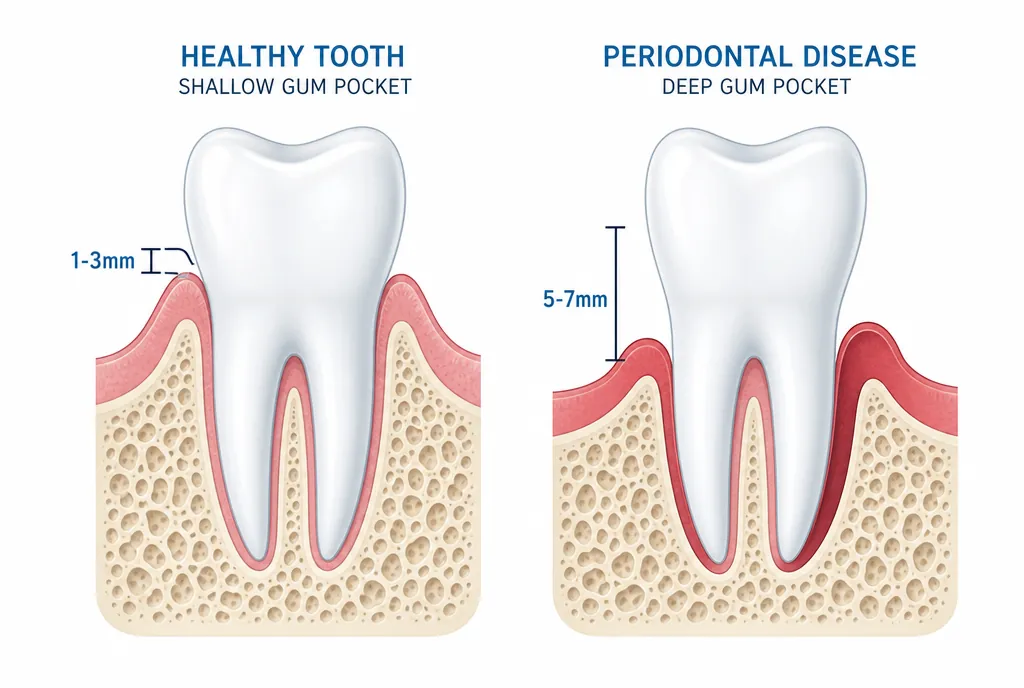
Here is where it gets more serious than cosmetics. Once the gum recedes, the pockets around your teeth deepen, and a low-grade infection sets in.
Most people assume the bacteria are dissolving the bone. They are not. Bacteria cannot do that.
What they do is trigger your immune system, which floods the area with inflammation. That inflammation then switches on the cells that dissolve your own bone and aims them at your jaw.
Picture a fire crew that hoses a burning house, then never shuts the water off, soaking it until it collapses from the water, not the fire. That is the process quietly going on under a receding gumline.
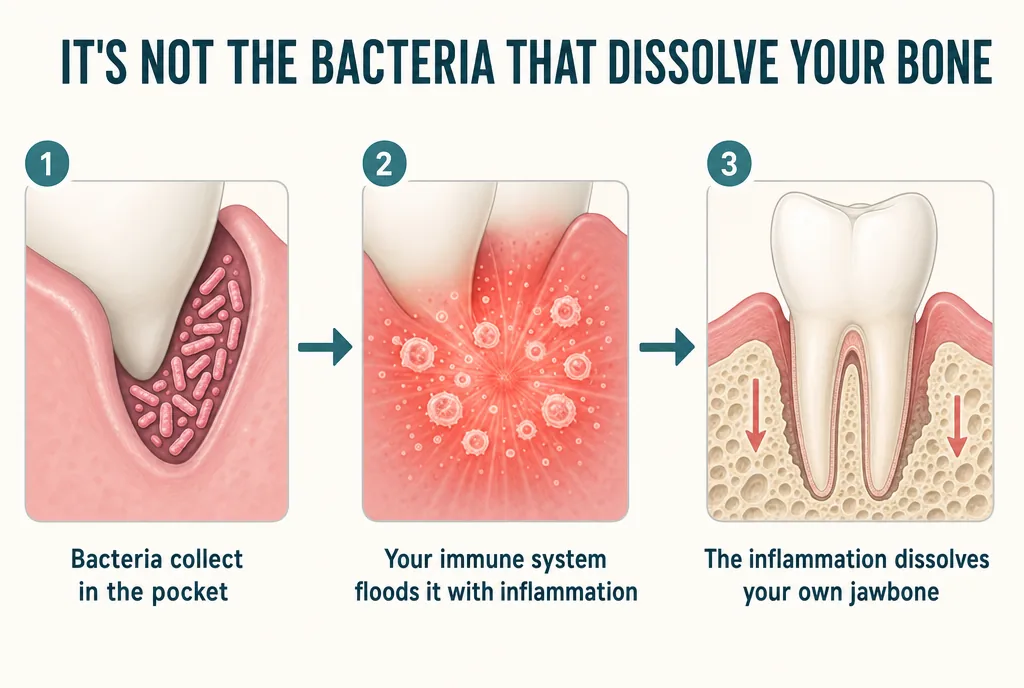
Lower estrogen sets the stage. Your own immune system does the damage. And nothing in a standard dental routine tells it to stop.
Why Cleanings, and Even Surgery, Don't End It
This is why extra cleanings rarely fix it. A cleaning scrapes the bacteria off the root, which helps for a few weeks.
Then the bacteria return, because nothing holds the space once they are gone. And the inflammation, the real cause, was never touched.
Even a gum graft rebuilds the tissue without calming the fire underneath, which is why so many women find the recession simply continues elsewhere.
The Two Things That Actually Help
To truly slow this down, two things have to reach the bottom of the gum pocket at the same time.
Good bacteria, to crowd out the harmful ones so they cannot keep returning.
And something to calm the immune overreaction that keeps dissolving the bone.
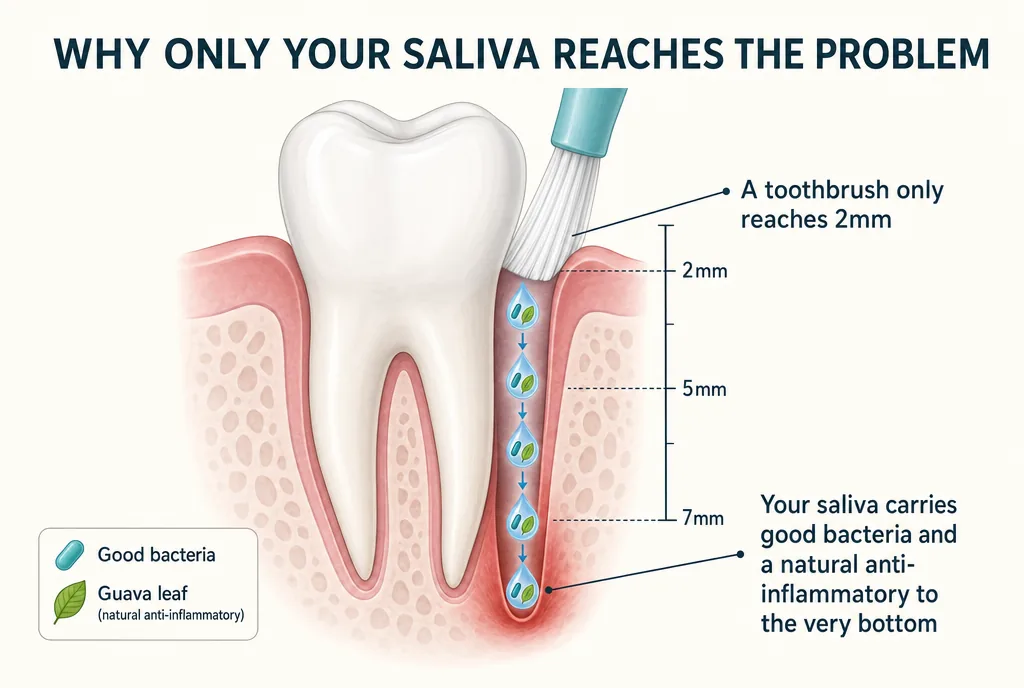
Here is the obstacle. Your toothbrush reaches about 2mm under the gumline. These pockets are 4, 5, 6mm deep. Floss cannot reach the bottom. Neither can any rinse.
But one thing in your body reaches the base of every pocket, every single day. Your saliva, each time you chew and swallow.
Using Your Own Saliva as the Delivery System
So the answer was never to scrub harder or to rush into surgery. It is to load your saliva with those two things and let your body carry them to the bottom of every pocket for you.
Automatically. Every day. To the depth a brush will never reach.
For women who want a gentle, non-surgical place to start, this is what I point them toward.
You cannot out-brush a hormone shift. But you can deliver the fix to the one place your body already reaches.
What I Recommend to Women Watching Their Gums Recede
The product I point them to is called Sulcara. It is not a pill you swallow and not a rinse you spit.
It is a chewable you dissolve after a meal, so it mixes into your saliva and rides down into every pocket.
It carries three strains of beneficial bacteria to hold the space the harmful ones keep reclaiming, plus a concentrated guava extract that calms the inflammation dissolving the bone. Chewing floods your mouth with saliva, and your saliva does the delivery. It is mostly natural ingredients.
It costs about $0.88 a day. No surgery, no graft, and a fraction of what either of those would cost.
- Buy 2, Get 1 Free: a full 90-day protocol for $79
- About $0.88 a day, versus thousands for grafts or repeated cleanings
- Non-surgical and mostly natural, a daily chewable, not a procedure
- 90-day money-back guarantee, and fewer than 1 in 100 people ever ask for it
- Made in the USA in a GMP-certified, FDA-registered facility
- No subscription unless you choose one
See if Sulcara is still in stock and start the non-surgical protocol here →
"My gums never gave me trouble until menopause hit, then they started receding fast and my dentist just kept saying I brushed too hard. Four months on this and the bleeding stopped and my gumline looks stable again. I felt so seen reading this."

— Janet W., Verified Purchase
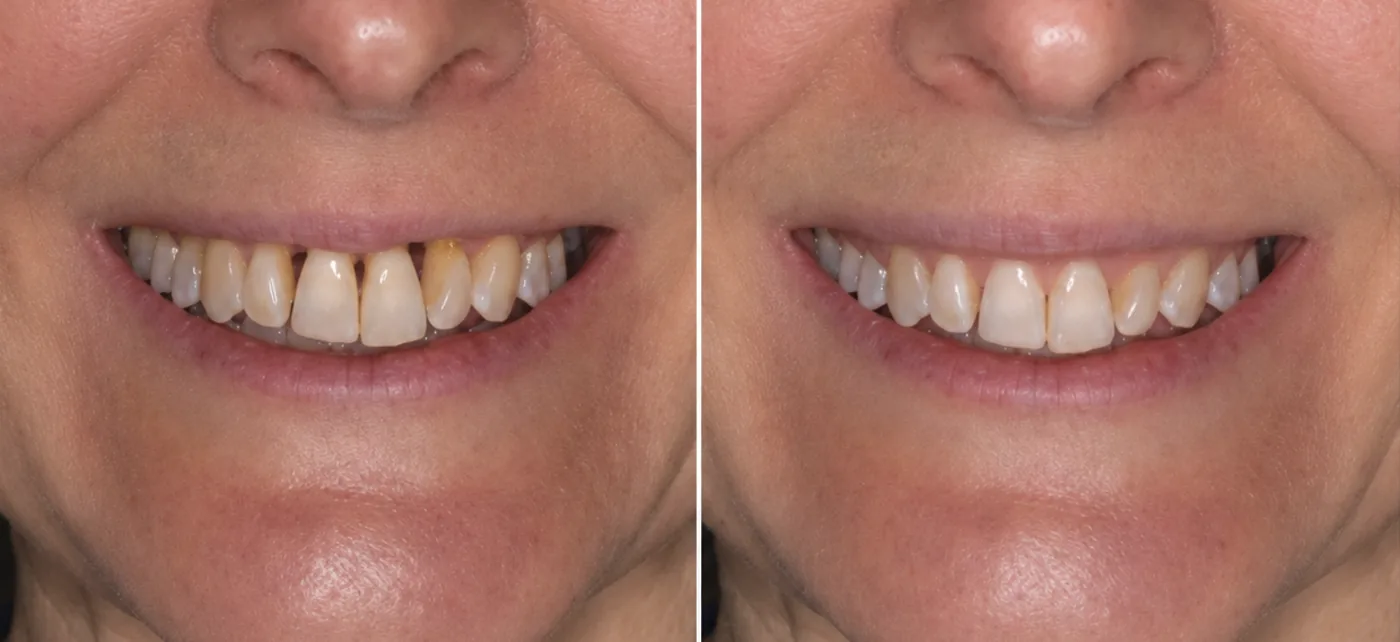
"I'm 56 and watched black triangles appear between my front teeth out of nowhere after menopause. This is the first thing that actually firmed my gums back up. My hygienist noticed at my last visit."

— Maria F., Verified Purchase
"I'd wasted money on swallowed probiotics that did nothing. You chew this and it coats the gumline. The recession finally stopped progressing and the sensitivity I'd lived with for two years is gone."

— Debra K., Verified Purchase
These live cultures are made in small batches. When this run sells out, the next takes weeks to grow.